


Response Ready
Fire, HazMat, Medical,
and Rescue courses
from the industry
experts
200,000+ Training Hours
Since 2005
62 Courses
Across six disciplines
5 International Regions
Vast instructional experience
Popular courses
Advanced Exterior and Interior Industrial Fire Brigade (604-FBXI)
OSHA 1910.156 (c) NFPA 1081
40 Hours
Industrial Rope & Confined Space Technician (520-IRCS)
NFPA 1006 & OSHA 1910.146
40 Hours
What's New?

3 Pitfalls to Avoid in Keeping Your Industrial Emergency Response Team Complaint
Industrial Emergency Response Teams (ERTs) must comply with confusing regulations and very complex standards when managing multiple response disciplines. Achieving compliance with these requirements can be extremely frustrating at times, especially while constantly chasing expired training qualifications required by OSHA and NFPA.

Client Testimonial
The team at E-Med Training far exceeded our expectations on the training they delivered to our organization. The instructors delivered meaningful content that kept the participants fully engaged and it was evident that they genuinely cared about the success of our team. We are looking forward to building a closer relationship with this outstanding group as we continue to develop our emergency management personnel.
Rodney Watkins, EHS Manager
SNF Holding Company

10-Step Guide for completing an “In-House” OSHA 1910.156 / NFPA 600 Fire Brigade Training & Equipment Audit
Ensuring the safety of personnel and the preparedness of industrial fire brigades is paramount in high-risk environments. The National Fire Protection Association (NFPA) sets standards that guide the formation, training, and operation of these essential emergency response teams through regulations like OSHA 1910.156 and national consensus standards such as NFPA 600 and NFPA 1081. Regular audits of training and equipment can play a pivotal role in not only maintaining compliance, but actual emergency response readiness. In this article, we'll explore the importance of conducting your own OSHA 1910.156 and NFPA 600 training and equipment audit.

Are Your Industrial Incident Commanders “Fire Ready?”
Industrial facilities face unique and complex fire and chemical risks, and when emergencies strike, there’s no room for error. That’s why OSHA standards (1910.156 and 1910.120(q)) and NFPA guidelines mandate that qualified Incident Commanders (ICs) lead these critical responses.
If your industrial site has an emergency response team, are they truly prepared? Click the Title and Check out our latest article on how qualified ICs can make a life-saving difference and meet legal compliance.

Mastering Flammable Liquids and Gas Response: Why Training Matters
Are you prepared to tackle fire emergencies involving flammable liquids and gases in your workplace? Training is not just a regulatory requirement; it's a crucial aspect of ensuring safety and effective response.
In my latest article, "Mastering Flammable Liquids and Gas Response: Why Training Matters," I explore the importance of comprehensive training tailored to industry standards and regulations such as NFPA and OSHA. From understanding fire risks to unleashing the capabilities of Incident Commanders, this article dives into the key training insights necessary for handling flammable substances safely.

Confidence or Chaos. The Choice Is Yours.
Every facility faces unique risks, hazards, and regulatory obligations. That’s why all E-Med emergency response training programs are designed to be customized to meet the specific needs of your operation.
Our team works with facilities across multiple industries to deliver practical training, technical guidance, and compliance support aligned with OSHA and NFPA expectations. Through local and regional training partnerships, we are able to provide flexible delivery options while minimizing travel costs and operational disruption.
Whether you need:
• Emergency Response Team (ERT) training
• Fire brigade or hazardous materials training
• Compliance program development
• Technical response guidance
• Readiness and documentation support through BrigadeIQ
Our team is ready to help.
If you have a specific challenge or training objective, let us know. A quick conversation is often the fastest way to determine the right solution for your team.

What Does “Right” Look Like When It Comes to Quality Training?
Recently, I was asked to provide a training session for a group of industrial emergency response and safety leaders around a simple but uncomfortable question:
What does right look like when it comes to quality training?
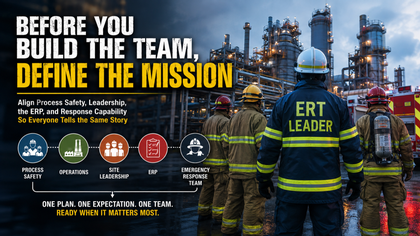
Before You Build the Team, Define the Mission
Why Process Safety, Site Leadership, the ERP, and Emergency Response Capability Must Tell the Same Story
© 2026 E-Med Training Services